What this page adds
The Faroese sub-sea tunnel tolls from the operator's own price list, dated, set against Iceland's two tolled sections, so the fees of each week are known before booking.
Faroe Islands or Iceland for one week
Eighteen islands joined by sub-sea tunnels against a country the size of a Ring Road: scale, roads and tolls, weather, cost bands, and which week each one makes.
By supjourney editorial team · published 1 November 2026 · ledger checked 1 November 2026 · 4 min read
The options, on one scale
| Option | Days | Driving | Cost band | Best months | Verdict |
|---|---|---|---|---|---|
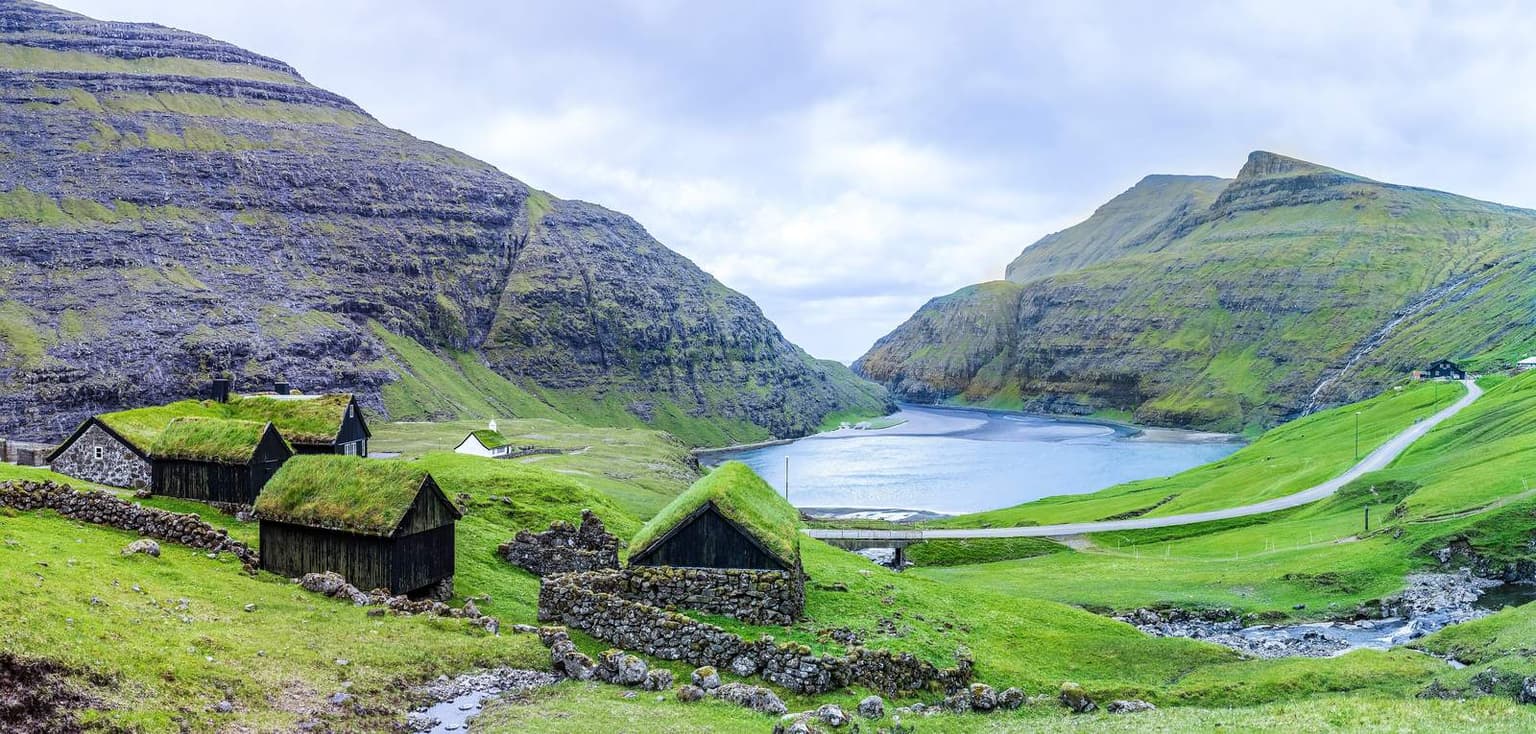
| Faroe Islands, loops from Tórshavn · Faroe Islands | 7 | 11 h | upper | May–September | Small, steep, green and wet; one hotel, short days, tunnels with tolls, and a week that is about walking and weather rather than driving. |
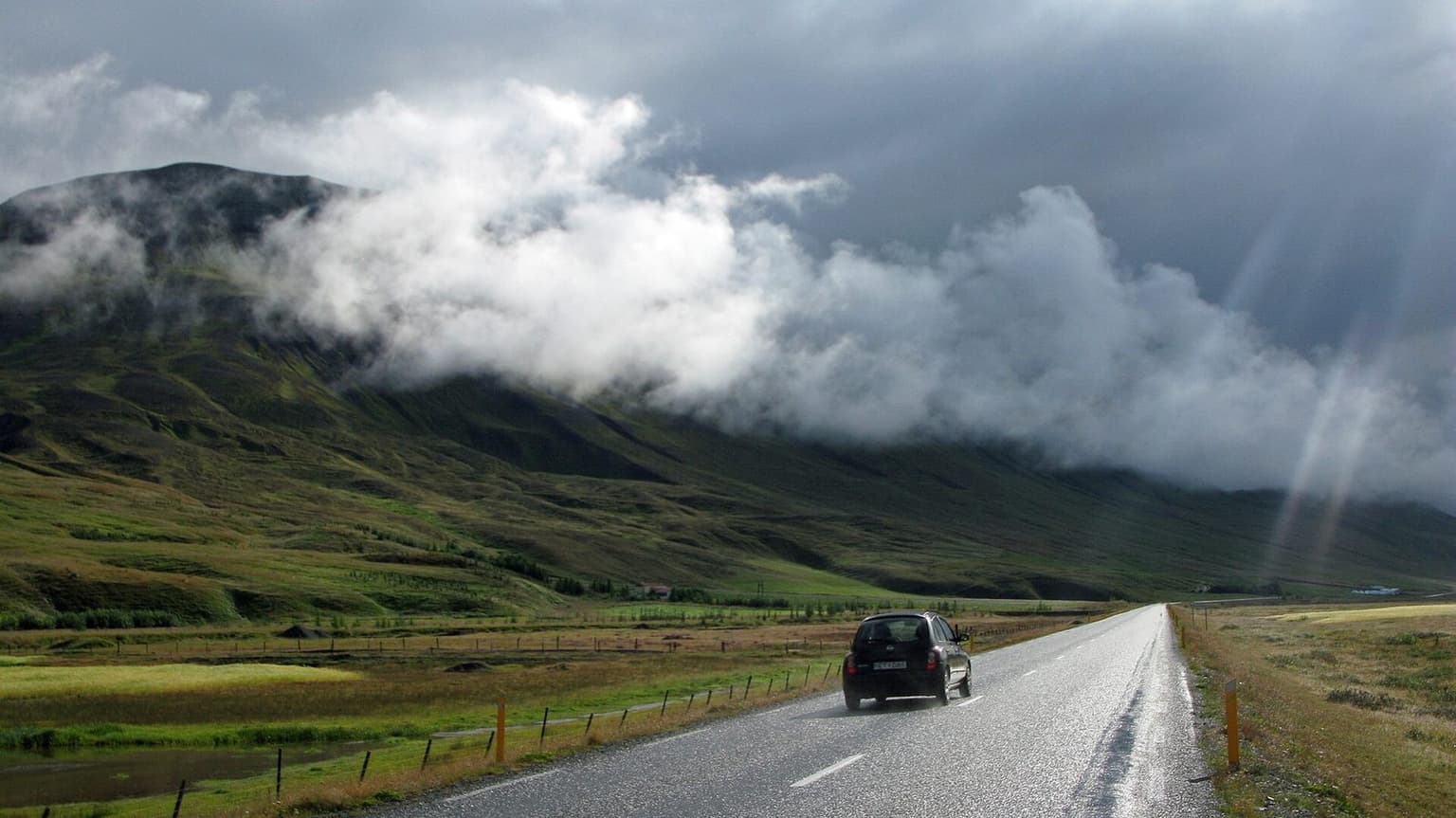
| Iceland, Ring Road · Iceland | 7 | 24 h | mid | June–September | The whole country in a loop with a new bed every night; three times the driving and a landscape at a scale the Faroes do not have. |
| Iceland, south and west · Iceland | 7 | 14 h | mid | All year | The famous sights without the long days, and the only one of the three that is a sensible winter week. |
Criteria: scale · roads, tunnels and tolls · weather · getting there · cost bands · crowds · winter
The answer first. For one week in summer, choose Iceland if you want scale and a road trip: a new town each night, glaciers, deserts, a coast of black sand, and twenty-four hours of driving to see it. Choose the Faroe Islands if you want the opposite: one hotel, short drives through tunnels under the sea, villages at the end of single-track roads, and a week that is mostly on foot and at the mercy of fog. For a week in winter, choose Iceland's south and west and keep the Faroes for a two-day stop from Copenhagen. For a fortnight, do both by ship.
The decision table
| Faroe Islands, from Tórshavn | Iceland, Ring Road | Iceland, south and west | |
|---|---|---|---|
| Area | about 1,400 km² | about 103,000 km² | the south-west third |
| Road in 7 days | about 700 km | 1,460 km | about 850 km |
| Driving, normal conditions | about 11 h | about 24 h | about 14 h |
| Longest day | about 135 km | 387 km | 260 km |
| Beds | one base (Tórshavn) | six towns | two or three |
| Tunnels and tolls | 4 sub-sea tunnels, tolled daily (Tunnil list) | 2 tolled sections | 1 tolled section |
| Ferries | Suðuroy and Mykines, optional | none | none |
| Weather | wetter, foggier, milder | drier, windier, colder | windiest coast |
| Daylight, 15 June, computed | about 19.7 h at Tórshavn | about 21 h at Reykjavík | about 21 h |
| Accommodation band | upper | mid | mid |
| Food band | upper-mid | mid | mid |
| Best months | May–September | June–September | all year |
| Winter | no | no | yes |
Scale
Iceland is roughly seventy times the Faroes' area, and the two weeks are shaped by that number. A Faroese road day from Tórshavn is 80 to 135 km, with the OpenStreetMap routing putting Gásadalur at 57 km and Klaksvík at 41; a Ring Road day is 85 to 387 km. The Faroes feel bigger than they are because no road is straight and every valley hides a village; Iceland feels exactly as big as it is.
Roads, tunnels and tolls
Faroese roads are good tarmac, 80 km/h outside towns and 50 inside under the Ferðslulógin, with single-track sections to the smaller villages and old single-lane tunnels with passing bays on the northern islands. The four sub-sea tunnels have replaced ferries and are tolled by camera; Tunnil's list gives 175 kr one-way without a subscription for the Eysturoyartunnilin and Sandoyartunnilin and 50 kr for the Norðoyatunnilin and Vágatunnilin, the last two charged in one direction. The hire firm bills the tolls afterwards.
Iceland's Ring Road is tarmac at 90 km/h with gravel on side roads at 80, single-lane bridges, and two camera-tolled sections, the Vaðlaheiði tunnel near Akureyri and the new Hornafjörður stretch, where Vegagerðin set a single trip at ISK 1,500 from September 2026. Iceland's F-roads need a 4x4 and are not part of any week on this site.
Weather
Both are North Atlantic. The Faroes are wetter and foggier and the fog is the week's real adversary: it hides Gásadalur for a day, cancels the Vestmanna and Mykines boats, and turns a ridge walk into a wet wait. Iceland is windier, especially on the south coast, where safetravel.is warnings and hire-car insurance both take the gusts seriously, and colder in the interior. Neither has reliable sunshine; the Faroes have the better rain gear culture and Iceland the better pools to wait it out in.
Getting there
Vágar airport has Atlantic Airways and SAS flights from Copenhagen and a handful of other cities, and the Norröna from Hirtshals all year. Keflavík has direct flights from most of Europe and North America. Vágar–Keflavík is a seasonal Atlantic Airways route; the Norröna links the two in the Iceland season. For a North American reader Iceland is one flight and the Faroes are two.
Cost bands
The Faroes are upper for beds and upper-mid for food, with a shortage of hotel rooms that makes July a booking problem. Iceland is mid for both with far more choice. Fuel is dated on each country page; the Faroese week burns a third of Iceland's at a similar price per litre. Tolls favour Iceland's occasional larger charges over the Faroes' daily small ones only if the Icelandic week stays south.
Crowds
The Faroes have few crowds and little capacity, so the two problems are the same: when a village car park is full, it is full. Iceland's named south-coast sights are crowded in summer and its north and east are not. A Faroese week is quieter; an Icelandic week can be made quiet by going north.
Winter
The Faroes in winter are a stop, not a week: short wet days, boats stopped, and the Norröna running Denmark–Faroes only, with no Iceland call from 21 November to 27 March on the 2027 schedule. Iceland's south and west in winter is open roads, ice caves, pools and the lights. If the week is in January the choice has made itself.
Verdict
One week, summer, scale and driving: Iceland. One week, summer, walking and one hotel: the Faroes. Any week in winter: Iceland's south and west. Two weeks: Copenhagen, the Norröna, three Faroese nights and nine in Iceland, which is the journey on this site that makes the comparison unnecessary.
Questions people ask
Is a week too long for the Faroes?
Which is cheaper?
What are the tunnel tolls?
Can I do both in a fortnight?
Which is better in winter?
Sources we checked
- Tunnil, prísir (tunnel tolls, Faroe Islands)
- Ferðslulógin (Faroese Road Traffic Act), consolidated, logir.fo
- Landsverk, Faroese road authority
- Vegagerðin, Hornafjörður Ring Road tolls (31 Aug 2026)
- Vegagerðin, the Ring Road
- Smyril Line, Sailing Schedule 2027 (PDF)
- safetravel.is
- OSRM routing on OpenStreetMap data (Faroese leg distances, checked 2026-11-01)